Not long ago, most business decisions were made on instinct, experience, and whatever information happened to be available at the time. That approach worked well enough in simpler markets, but the world businesses operate in today move too fast and carry too many variables for gut feeling alone to be a reliable guide.
The shift toward data-driven decision-making has been one of the defining changes in how organizations operate over the past decade. And at the center of that shift are Business Insights Platforms, tools that take the overwhelming volume of data modern businesses generate and turn it into something leadership teams can actually use. Understanding what these platforms do, why they matter and how they drive organizational growth is increasingly important for anyone serious about building a business that lasts.
What Business Insights Platforms Actually Are
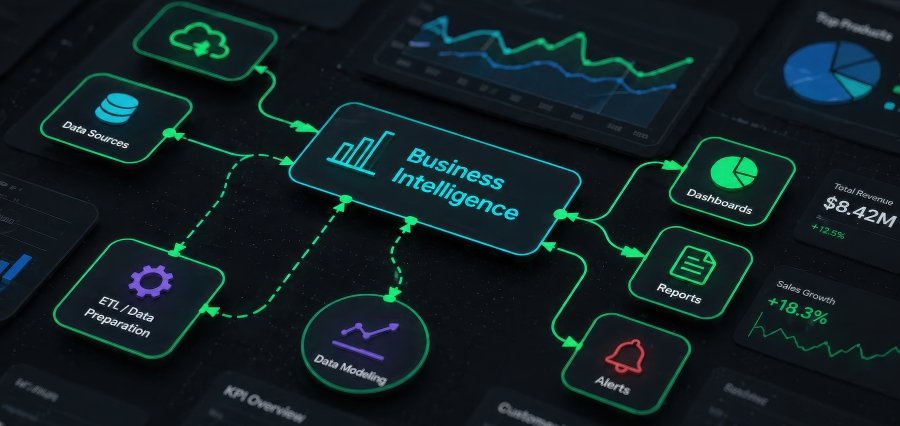
Before getting into what these platforms do for growth, it helps to be clear about what they are. Business Insights Platforms are software systems that collect data from across an organization, such as sales figures, customer behavior, operational metrics, financial performance and more, and bring it together in one place where it can be analyzed, visualized, and acted upon.
They are closely related to, and in many cases overlap with, business intelligence platforms, a term that has been used in the technology and business world for some time to describe tools designed to support informed decision making through data analysis. The two terms are often used interchangeably, though Business Insights Platforms tend to carry a broader implication, not just analyzing historical data but generating forward-looking insight that shapes strategy. What both share is the fundamental purpose of replacing guesswork with clarity.
The Challenge of Fragmented Information
To appreciate the value of Business Intelligence Platforms, it helps to understand what life looks like without them. Data exists in most organizations, but it tends to live in separate places; the sales team has its numbers, finance has theirs, operations tracks different metrics entirely, and customer service is working from its own set of records.
When leadership needs a complete picture, pulling it together is slow, manual, and prone to inconsistency. By the time a report reaches the people who need it, the situation it describes may already have changed. Decisions get made on incomplete or outdated information, and the opportunity cost of that is high.
Business intelligence platforms solve this by centralizing data and making it accessible in real time. Leaders stop waiting for reports and start seeing what is actually happening across the business as it happens.
How These Platforms Drive Organizational Growth
Growth is not a single event; it is the result of consistently making better decisions than your competition over a sustained period of time. Business Insights Platforms contribute to that in several distinct ways.
Spotting opportunities earlier. When data from across the business flows into a single view; patterns become visible that would be invisible in siloed systems. A shift in customer purchasing behavior, a product category gaining unexpected traction, a region where demand is building, these signals appear in the data before they show up as obvious trends. Organizations that see them early can move first.
Improving operational efficiency. Growth is not just about revenue; it is also about making the organization run better. Business Insights Platforms surface inefficiencies that would otherwise stay buried. Bottlenecks in operations, underperforming processes, and areas where cost is running ahead of output all become visible when the data is properly organized and accessible.
Bringing Teams Together Around Shared Information
One of the less discussed but genuinely important benefits of Business Intelligence Platforms is what they do for alignment within an organization. When different teams are working from different data sets, disagreements about performance and direction are almost inevitable. Each team believes its own numbers and interprets the situation through its own lens.
When everyone works from the same centralized platform, those disagreements shrink considerably. Sales, marketing, finance, and operations are all looking at the same picture. Conversations about performance shift from debating whose numbers are right to discussing what the shared numbers mean and what to do about them. That kind of alignment is genuinely valuable; it removes friction and focuses collective energy on moving forward.
Maximizing the Value of Business Intelligence
Business intelligence platforms are only as useful as the people working with them. A platform that nobody uses consistently, or that only a small technical team understands, does not deliver the organizational value it is capable of. Getting real return from these tools requires building a culture where data is genuinely part of how decisions get made at every level, not just at the top.
That means investing in training, making platforms accessible and easy to navigate for non-technical users and creating habits within teams around regularly reviewing and acting on the insights available to them. The technology creates the capability. The people and the culture determine whether it gets used.
Choosing the Right Platform for Your Organization
Not every Business Insights Platform is built the same way or suited to every type of organization. The right choice depends on the size of the business, the complexity of the data involved, the technical capability of the team, and the specific decisions the organization most needs to make better.
What matters most is not finding the most sophisticated option available but finding the one that fits how the organization actually operates and that people will genuinely engage with day to day. A simpler platform used consistently will always outperform a complex one that sits largely unused.
In Summary
Organizational growth in today’s environment increasingly belongs to businesses that make better decisions faster. Business Insights Platforms are one of the most practical tools available for building that capability. They bring clarity to complexity, alignment to fragmented teams, and confidence to decisions that would otherwise rest on incomplete information.
As business intelligence platforms continue to develop and become more accessible across organizations of all sizes, the gap between businesses that use data well and those that do not will only widen. Getting serious about how your organization collects, organizes, and acts on its data is not a future priority; it is a present one.