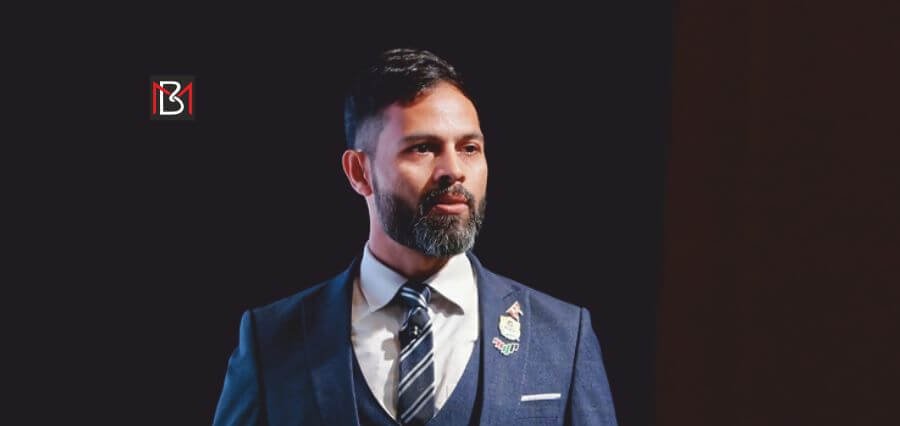
Few people have the vision and experience to navigate between technology and medicine fluidly in an environment where they are convergent in unprecedented complexity. Padam Kafle, Head of Operational Technology and Innovation at Aster Hospitals UAE and Oman, is one such example of visionary leadership at the forefront of cutting-edge healthcare technology. He is particularly aware of the human need to improve and save lives, which propels all digital revolutions.
The Purpose-Driven Philosophy of Innovation
The simple yet effective maxim “technology for the benefit of mankind, not mankind for the benefit of technology” is ingrained in Kafle’s leadership philosophy. In the healthcare industry, where technological choices directly affect patient outcomes and quality of life, that idea is especially relevant.
“Each project has to bring real benefit to patients, clinicians, or operations,” adds Kafle, who explains his inventiveness and goal-oriented methodology. His leadership is also based on transparency, accountability, and empathy. Even though these are becoming more significant as healthcare organisations become digital entities, the human touch that displays high-quality service is always important.
Thanks to Kafle’s collaboration model of facilitation, all stakeholders- from frontline staff to senior executives are participating in the technological transformation process as contributory stakeholders.
A Journey Shaped by Diverse Experience
Kafle’s professional journey to healthcare tech leadership hasn’t been straight, and that enhances her strength. His path followed IT infrastructure to clinical systems integration to enterprise-level digital transformation. These have given him a bird’s-eye view of technology as an integrated system, not tools in silos.
With the culture of innovation at Aster Hospitals, Kafle has managed to determine that operational excellence comes through organizational purpose and technological potential being co-aligned. “It’s not automating the processes but identifying where inefficiencies are being created and creating solutions that are intuitive, scalable, and sustainable,” he further adds to it.
This dense richness of experience has instilled in him a culture of ongoing improvement, minute-by-minute measurement and tracking of significant key performance indicators of great measures to develop dynamic health environments. Excellence for Kafle is not an instant but a mind-set. It’s a mind-set that pervades the very philosophy of his team towards each technology deployment.
Balancing Innovation with Patient-Centricity
Of all the health technology leadership challenges, the most difficult may be keeping the exact balance between state-of-the-art cutting-edge technology and patient care. Kafle excels at keeping on this thin line by ensuring that each technological innovation is not merely considered from the technical brilliance angle but from the manner it will contribute to the patient experience.
Regardless of whether they introduce AI-driven diagnosis, robot-assisted surgical systems, or hospital automation systems, it is in the evaluation phase that Kafle’s team strictly considers the patient outcome. That is to say, they involve clinicians, nurses, and even patients in the feedback loop during designing and implementing.
“Technology must make it simpler to care and improve the patient experience,” Kafle maintains, whether through reduced wait time, improved diagnosis, or adding remote care ability. Swinging from one extreme to the other between innovation and empathy, his people prioritize people ahead of dispensation of care.
Tackling Tough Digital Transformation Challenges
Perhaps Kafle’s biggest achievement is to manage digital change in various locations and nations with a single standard and adjustment at the grassroots level. Medical settings are highly dynamic and change in management is a constant issue daily, especially when rolling out technology across different geographies and cultures.
Kafle had a phased modular strategy, deconstructing monolithic-bang rollouts into projects that were smaller. He planned to hold stakeholder alignment workshops, keep cross-functional implementation teams intact, and have open architecture for geographic-based messaging. Most importantly, he spent a tremendous amount of time training and converting champions, realizing that any system cannot even possibly provide outputs when the users are not confident and competent.
This resulted in a robust interoperable system that maintained local idiosyncrasies without deviating from the main objective. It succeeds because Kafle got the balance between standardisation and customisation just right.
Being Agile in a Rapidly Changing Environment
With technology and healthcare still overlapping, the concept of agility is to provide power to systems and teams. Kafle has tackled this problem from countless angles, taking a cloud-first and API-first approach to enable scalability, integration, and rapid innovation.
As a leader, he has developed a test-and-learn culture leaning toward experimentation with new things, hypothesis testing, and rapid learning from failure. This is complemented by the constant observation of global healthcare technology trends, industry events, and engagement with start-ups and established vendors.
“It allows us to stay one step ahead and not be playing catch-up,” adds Kafle, “particularly in an era when new technologies such as generative AI, precision medicine, and Internet of Medical Things (IoMT) are transforming the delivery of care.”
The Driving Force Behind Continuous Innovation
To Kafle, it is about how technology can address true, frequently life-critical problems. In health, where a minute can make a difference, even incremental innovation can result in fundamentally improved outcomes.
“It’s the excitement of having the ability to close care gaps, eliminate errors, optimize care, and save lives,” he explains. And that is compounded by observing the health care sector transform from the antiquated reactive and prognostic approach to care into proactive and predictive care.”
By being at the forefront of such an evolution, enabling organizations to make the transition from volume to value care through operational technology, the work is most rewarding professionally to Kafle. It’s more about seeing what can be done through providing care, and less about how to get technology in.
Constructing a Legacy of Meaningful Innovation
A preview of the future, Kafle has a vision for an impact-based innovation culture in which technology would be a disruptor and not a facilitator. His vision for Aster Hospitals is to spearhead technology adoption as well as champion the way delivery is executed in healthcare in the MENA region.
His plans are more along the lines of developing operating models and digital health standards that scale, rather than less short-term technical adjustments. Simultaneously, Kafle is working towards preparing the next generation of leaders. He intends to nurture people who get to enjoy the intersection of empathy, ethics, and engineering.
“If I can help in developing a more integrated, patient-centered, and resilient health care system in the UAE, Oman, and beyond, that would be a legacy,” he adds.
Essential Qualities for Modern Healthcare Technology Leadership
Drawing upon his deep experience, Kafle delineates a few of the most important skills of healthcare technology leaders in the current era. The contemporary leader must be a change agent, communicator, and business strategist who is technically proficient and has a keen eye for watching business objectives, patient psychology, and clinical workflows.
Cornerstones are empathy to come up with solutions that work actually for human beings, flexibility in responding ahead based on future technologies and requirements, and vision in foretelling future trends and moving the teams accordingly. It is teamwork needed in closing IT, clinical, and administrative gaps, and honesty is most crucial due to business ethics in healthcare.
Above everything, Kafle also highlights having a mission-oriented mindset to ensure that decision-making is undertaken concerning the final objective of improved health outcomes.
Strategic Priorities for the Future
In the short term, Kafle has identified three strategic pillars that will guide Aster Hospitals’ two-year technology road map. First is digital integration, where they must speed up integrating AI diagnostics, telemedicine platforms, and remote monitoring into a single digital ecosystem smoothly.
Secondly, big data and analytics are utilized through data-driven decision-making to shift from reactive care to predictive and personalized care. For instance, enhanced operational KPIs, resource planning, and measurement of patient outcomes.
Thirdly, cybersecurity and compliance always take top priority with faster services digitization, such as patient privacy of data and regulation compliance across all platforms.
Also, Kafle wants to collaborate more with the regional health regulators to determine Oman and UAE’s digital health policy. The final long-term vision is to design smart patient-centered hospitals that are robust and would be replicated at the regional and international level as well.
A Vision for Connected, Compassionate Healthcare
Kafle’s vision for healthcare technology leadership goes beyond the operational efficiency. It is a high-touch, high-tech healthcare model. Under his leadership at Aster Hospitals UAE and Oman, he is revolutionizing healthcare units into responsive, data-driven, and caring environments.
His business insight, strategic planning, and people-centered innovation is not just rewriting the healthcare destiny of Aster. It’s shaping the broader regional destiny to a more connected, more compassionate future. In an industry where technology sometimes seems clinical and impersonal, Kafle’s vision is a welcome reminder that the ultimate goal is still human in intention: to care more, to make lives better, and to build a better world for all.