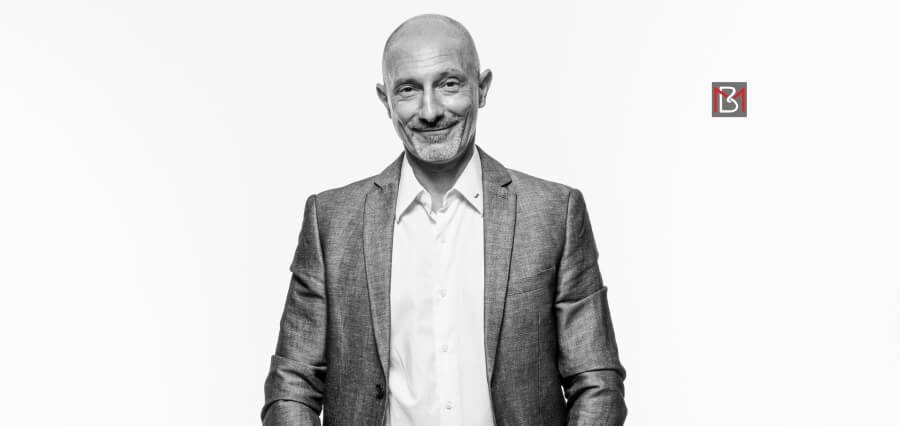
Great leaders always start from knowing themselves. The path to being an improved leader usually starts with a simple question rather than an answer. The qualities of leadership are linked with strategy, vision, and decisions, but for David Fiorucci, leadership always starts from a deeper place. For many years now, he has been asking one simple but powerful question to over 35,000 people in different sectors and countries: What does a good boss mean? This is the source of his leadership mindset and his role as CEO of LP3 Ltd. and the growth of Octocracy.
Thousands of conversations revealed nine defining themes. Yet one principle stood above them all: self-reflection. David believes it is the foundation of every great leader, and he is convinced that neither having a strategy nor a name is the starting point for becoming an effective leader. First, one needs to be brave enough to get to know oneself. This principle became the foundation of the LP3 model, which is built on the belief that the more aware leaders are of their own patterns and behaviors, the better they can inspire and empower others.
Leadership Shaped by Experience
David does not point to major achievements or career milestones when asked what shaped him the most. Instead, he reflects on two experiences that had a lasting impact on his leadership and personal outlook. The first came early in his career. At the age of twenty-four, he was given responsibility for leading his first team with very little preparation. He relied on authority because he believed that was the role of a leader. The team resisted his approach, and the experience taught him an important lesson. He realized that people do not follow a title. They follow trust. It is a lesson that has stayed with him throughout his career.
The second experience developed over several years. While raising three children, David watched one of them face a serious health challenge with remarkable strength and composure. Supporting a loved one through such uncertainty changed his perspective. It helped him focus on what truly matters and made him see that many of his earlier ambitions were less important than he had once believed.
These two defining experiences shaped his approach to leadership. The first taught him the importance of earning trust instead of relying on authority. The second reminded him to stay grounded and value what matters most. Together, they reinforced his belief that leadership is not about performance. It is about being present, building trust, and supporting others with consistency.
Steady Values in Uncertain Times
David’s leadership philosophy is built on three principles that he considers essential, especially during uncertain times. These principles are clarity of intention, consistency between words and actions, and being fully present in every situation.
He believes these principles do not remove uncertainty from difficult decisions or challenging situations. Instead, they help him avoid adding to the confusion. David prefers to remain consistent in his values while adapting his methods to meet changing circumstances, and this balance is most important when teams face uncertainty and need steady leadership.
The Power of Trust and Empathy
Many executives describe the balance between achieving business results and showing empathy as a daily challenge. David sees it differently. He considers that performance and humanity should work together rather than compete with each other. To explain this philosophy, David uses the example of an octopus. Each of its eight arms can act independently while remaining connected to a single purpose. He applies the same idea to leadership by giving decision-making authority to the people closest to a problem while keeping the overall vision and direction clear.
David believes trust is not based on feelings alone. It is created through clear responsibilities, honest feedback, and consistent accountability. He also believes empathy should not be treated as something that matters only during calm periods. It must be part of the way decisions are made, especially during difficult times. His leadership model is built on eight core principles: clarity of purpose, shared decision-making, a strong feedback culture, emotional intelligence, continuous learning, strategic alignment, psychological safety, and personal well-being.
Empowerment Through Ownership
David believes that empowerment is meaningful only when it is paired with accountability. In his view, true empowerment means that people understand what they are expected to achieve, the role they play, and the responsibility they carry for their decisions.
He measures empowerment by asking three simple questions. Do people understand the goal? Do they know their role? Do they recognize the consequences of their actions? If they cannot answer all three, he sees it as a leadership responsibility to provide greater clarity and support.
David encourages decision-making by the people who are closest to the situation. He also ensures that teams understand the purpose behind a goal instead of simply receiving instructions. In his experience, people take greater ownership when they help shape decisions rather than simply follow them. Before asking others to adopt a new idea or framework, including the reading grid called SALTER, he applies it to his own decisions first.
Conversations That Matter
David has learned that difficult conversations are rarely just about a missed target or a mistake. More often, they are about the difference between a person’s intention and the impact of their actions. He has found that once people become less defensive, they usually reach agreement on the facts much sooner than expected.
His approach begins with clear observations instead of judgment. He focuses on what happened, explains its impact, and takes time to understand the other person’s perspective before making a decision. He asks questions before offering conclusions and separates the individual from the behavior that needs to be addressed.
David also accepts that these conversations are not easy. He openly acknowledges the discomfort because doing so often helps reduce tension. His goal is to protect the relationship while encouraging honest communication. He believes that if a team cannot have difficult conversations without damaging trust, people will eventually avoid those conversations altogether. In the long run, that creates bigger problems than the original issue.
Bridging Cultures
David’s career has taken him across Switzerland’s French, German, and Italian-speaking regions, as well as into France, Germany, and Austria. He has worked with organizations in industry, finance, and the public sector. These experiences taught him that while professional skills and good intentions are understood across cultures, ideas such as respect and clear communication are often shaped by local perspectives.
Despite these differences, David has found that the core expectations of leadership remain remarkably consistent. Research involving more than 35,000 responses from people across different cultures and industries identified the same nine qualities of an effective leader. The way people express these expectations may differ, but the values behind them remain the same.
For David, connecting with people from different backgrounds begins with understanding these shared values. He then adapts his communication to suit the individual and the cultural context. This approach has also guided the development of his leadership frameworks, which are available in multiple languages, including French, German, English, Italian, and Dutch, with additional languages under consideration. He believes that a leadership framework should be able to connect with people across cultures, not just within a single language.
Reflection Beyond the Workplace
Beyond work, David finds clarity through simple routines. He enjoys walking in the mountains with his family dog, without his phone or a fixed plan. He says many of his best ideas come during these walks rather than while sitting at a desk.
His reading extends well beyond the field of management. He explores subjects such as philosophy, neuroscience, symbolism, and history. David has also been a Freemason for many years. He credits this experience with teaching him the value of patience, humility, and thoughtful reflection.
David follows one personal rule in both his life and his work. He tests every idea in his own life before sharing it with others. If a principle from his leadership models, including SALTER, does not stand up in his family life or in his own decisions, he does not believe it is ready to be taught. He also protects time for rest and reflection because resilience is built not only by working harder but also by knowing when to pause.
The Human Advantage
David expects artificial intelligence to take on more routine, analytical, and strategic work in the years ahead. However, he points out that technology cannot replace human judgment, ethical decision-making, or the ability to support people through change. He sees these qualities as becoming even more important as artificial intelligence continues to evolve.
He is adapting to this shift in two ways. First, he has integrated artificial intelligence into leadership assessment tools to provide more personalized insights and make them available on a larger scale. Second, he developed SALTER, a reading grid that expands on frameworks such as VUCA and BANI. SALTER identifies six major challenges of the modern world: information overload, artificiality in digital lives, unstable roles and identities, growing polarization, avoidance of responsibility, and a loss of meaning. Each challenge is paired with practical ways to restore balance and improve decision-making.
David believes that traditional command and control leadership is becoming less relevant in an increasingly complex world. He also sees sustainability and environmental, social, and governance principles as an essential part of responsible leadership. In his view, leaders should not focus only on improving systems and performance. They must also consider the impact of their decisions on people, communities, and the environment.
A Legacy Built on Impact
When asked how he would like to be remembered, David does not focus on the models he created or the books he wrote. Instead, he hopes people remember that he helped others become the best version of themselves. He wants to be known as someone who challenged people to grow, remained honest even when it was difficult, and focused on what truly mattered.
David measures his legacy by the impact he has on others. If the people he has mentored become more thoughtful, lead with greater clarity, and place less importance on personal recognition because of the conversations they shared, he considers that a lasting achievement. He also hopes people see that he lived by the same principles in his personal life that he encouraged in professional settings.
His advice to aspiring leaders is to focus on making a meaningful difference rather than chasing titles. He encourages them to understand the values they stand for before deciding what they want to become. David also recommends surrounding themselves with people who are willing to question their ideas, not just support them. He reminds future leaders that they do not need to wait for the perfect framework to begin leading with purpose.